
This upcoming lecture is co-sponsored by the ANU Gender Institute and the School of Archaeology and Anthropology and is free to attend. Register your attendance through Humanitix to stay up to date with event information.
For the renegade dancer, philosopher, and paleoanthropologist, Maxine Sheets-Johnstone (2011), proprioception is the sense of self that one gains through movement, and it is only in movement that one gains a sense of self. If Sheets-Johnstone is correct, proprioception is where consent begins. In this talk, I share a vignette from the life of my nonverbal, multiply disabled daughter. Millie has little hand-eye coordination. Yet I was compelled to bring her to a bank branch to sign a check issued by the State of California that was supposed to provide her access to payment for her care. My discussion hovers around a question: if, as disability anthropologists and others have argued, consent is a process, not an event, could proprioception give us entry into a more capacious understanding of what it means to be a political actor?
Sheets-Johnstone, Maxine. 2011. The Primacy of Movement. Expanded Second Edition. Philadelphia: John Benjamins Company.
Danilyn Rutherford is an anthropologist and author. She began her career as a visiting tutor at Goldsmiths College, before joining the faculty at the University of Chicago, then the University of California, Santa Cruz, where she was professor and chair.
Her early work focused on the Indonesian-occupied West Papua, a troubled territory on the eastern half of New Guinea. More recently, she’s been exploring the social worlds of young people with severe and profound intellectual disabilities in the United States. Her interests are broad and eclectic. She has written on kinship, Christian conversion, disability, nationalism, sovereignty, missionary language ideology, Franz Kafka’s “In the Penal Colony,” affect, money, technology, climate change, and Cormac McCarthy’s The Road.
She has a passion for supporting other scholars, which she satisfies through her day job as President of the Wenner-Gren Foundation for Anthropological Research.
Location
Speakers
- Danilyn Rutherford
Image Gallery
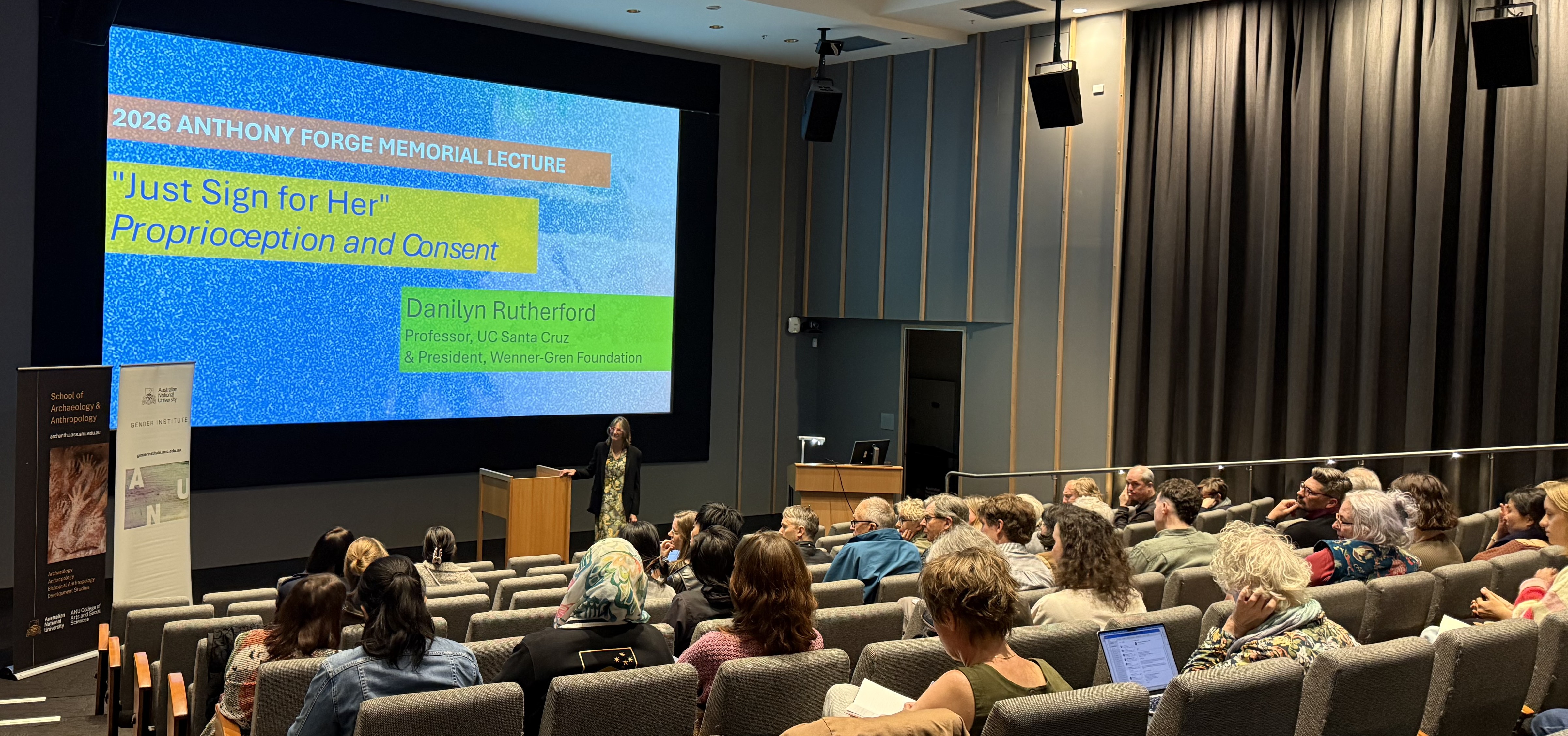


Pictures from the event